

University of Minnesota
http://twin-cities.umn.edu/
612-625-5000

The Oshkosh Woodworkers Strike of 1898

Thomas Kidd
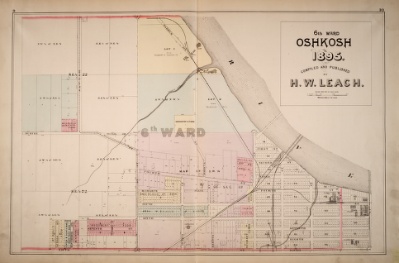
By the late nineteenth century, Wisconsin was one of the premier lumber producing states in the country, and Oshkosh became a major lumber manufacturing center. While the industry prospered, the factory workers toiled for very low wages, and their working conditions and wages continued to deteriorate. Following rising prices after the U.S. declared war on Spain in April 1898, woodworkers voted to strike, and the strike soon grew violent. In an attempt to stop the strike, the owner of the Paine Lumber Company and his son accused three of the labor leaders of criminal and civil conspiracy to damage their company. The strike was called off after the preliminary hearing, but labor leader Thomas Kidd asked Clarence Darrow to defend him and the other labor leaders against the conspiracy charges. All of the men were found not guilty. While the case did not provide meaningful advancement for the workers, the verdict remains a pivotal moment in labor history and Darrow’s tactics and success maintained his popularity in labor circles.

"It has fallen to your lot, gentlemen, to be leading actors in one of the great dramas of human life. For some mysterious reason Providence has placed in your charge for today, aye for ages, the helpless toilers, the hopeless men, the despondent women and suffering children of the world; it is a great, a tremendous trust, and I know you will do your duty bravely, wisely, humanely and well; that you will render a verdict in this case which will be a milestone in the history of the world, and an inspiration and hope to the dumb, despairing millions whose fate is in your hands." – Conclusion of Clarence Darrow's closing argument in the trial of State of Wisconsin v. Kidd, Zentner and Troiber (1898).

Argument of Clarence S. Darrow in the Wood-Workers Conspiracy Case (1898).

Clarence Darrow's final argument in the case of the State of Wisconsin v. Thomas I. Kidd, George Zentner and Michael Troiber for conspiracy arising out of the strike of Woodworkers at Oshkosh, Wisconsin. The defendants were acquitted on November 2, 1898.

"The Very Pictures of Anarchy": Women in the Oshkosh Woodworkers' Strike of 1898, By Virginia Glenn Crane, 84 Wisconsin Magazine of History 44-59 (Spring 2001).

Article which describes the important role women played in supporting the strike. Professor Crane is also the author of the most comprehensive book about the strike: The Oshkosh Woodworkers' Strike of 1898: A Wisconsin Community in Crisis. Used by permission of the Wisconsin Historical Society.

Newspaper clippings from Thomas Kidd's scrapbook.

Newspaper clippings about the Oshkosh Woodworker strike and other labor issues. Courtesy of the Wisconsin Historical Society.

The American Workman by Thomas Kidd

Thomas Kidd, General Secretary of the Amalgamated Wood-Workers International Union of America, was the main defendant in the conspiracy trial after the Oshkosh Woodworkers' Strike. Published in The Making of America by Robert Marion La Follette, William Matthews Handy, Charles Higgins, 1906.

Letters Written by Thomas Kidd about the Oshkosh WoodWorker' Strike (1898).

Five letters written by Thomas Kidd as General Secretary of the Amalgamated Wood-Workers International Union of America. Kidd makes several references to Clarence Darrow. Courtesy of the Wisconsin Historical Society.

The Amalgamated Wood Workers' International Union of America: A Historical Study of trade unionism in its Relation to the Development of an Industry (1912).

This doctoral thesis was written by Frederick Shipp Deibler.

Photos - Key Figures

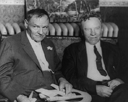
Thomas I. Kidd and Clarence S. Darrow
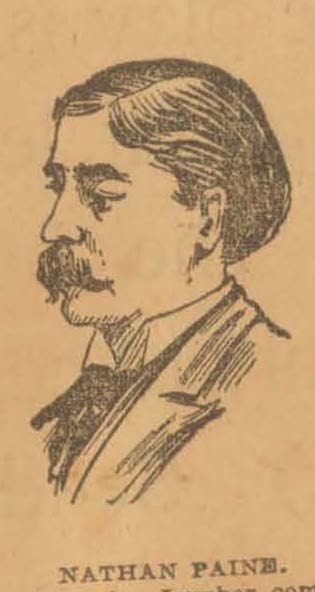
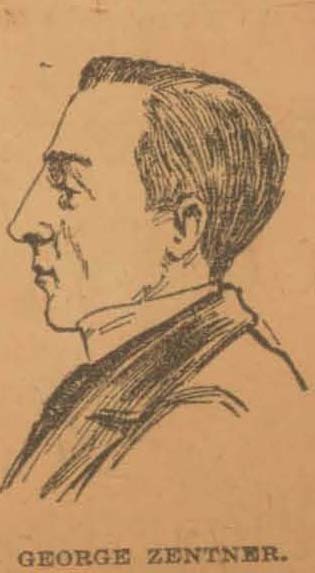
Drawings in the Oshkosh Times, November 1898. From the Thomas Kidd scrapbook. Courtesy of the Wisconsin Historical Society.
Nathan Paine
Nathan Paine, the son of George Paine, was an officer and stockholder of Paine Lumber Co. It was Nathan Paine who swore out the complaint against Thomas Kidd, George Zentner and Michael Troiber accusing them of criminal conspiracy for conspiring to damage Paine Lumber Company. During the trial Nathan Paine actually worked with the prosecution and often left his seat to go up and confer with Houghton the prosecutor until the defense objected to this. Nathan took over the company when his father died in 1917. From newspaper drawing in Thomas Kidd scrapbook. Courtesy of the Wisconsin Historical Society.
George Zentner
Co-defendant with Thomas Kidd.
Thomas I. Kidd
From newspaper clipping in Thomas Kidd scrapbook. Courtesy of the Wisconsin Historical Society.
Thomas I. Kidd
Defendant Thomas Kidd from newspaper drawing. Courtesy of the Wisconsin Historical Society.
Michael Troiber
Co-defendant with Thomas Kidd.
Gerald Massey
Gerald Massey (1828 - 1907) was born into poverty in England and did not have any chance at an education. But he became a self-taught scholar, a noted poet and was particularly well known as an Egyptologist. Clarence Darrow quoted from the poem The People's Advent by Gerald Massey during his closing argument in the Oshkosh conspiracy trial.
Drawing of Clarence Darrow in newspaper
From newspaper clipping in Thomas Kidd scrapbook. Courtesy of the Wisconsin Historical Society.

Photos

William Dean Howells c. 1908
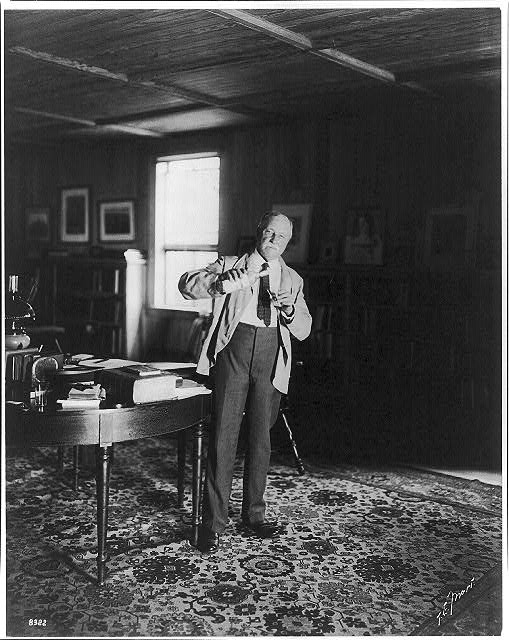
Clarence Darrow's closing argument was published and sold in pamphlet form. William Dean Howells, who was the editor of the Atlantic Monthly from 1871 - 1881, said Darrow's argument was "as interesting as a novel." Library of Congress Prints and Photographs Division, LC-USZ62-61300.
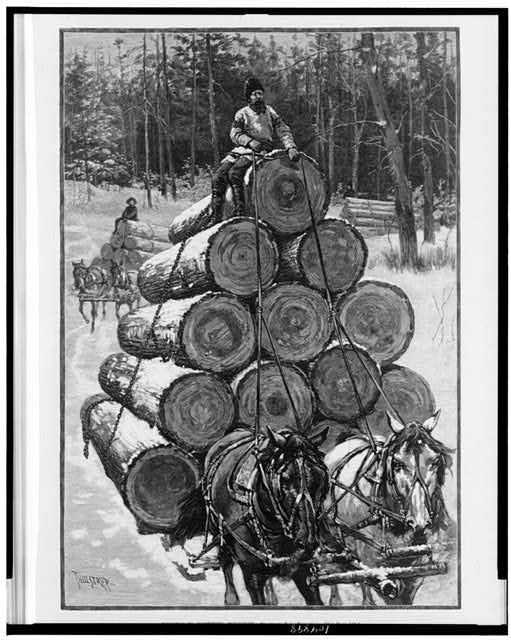
Logging in northern Wisconsin
Illus. in: Harper's Weekly, 1885 Feb. 28, p. 137. Library of Congress, LC-USZ62-104898.
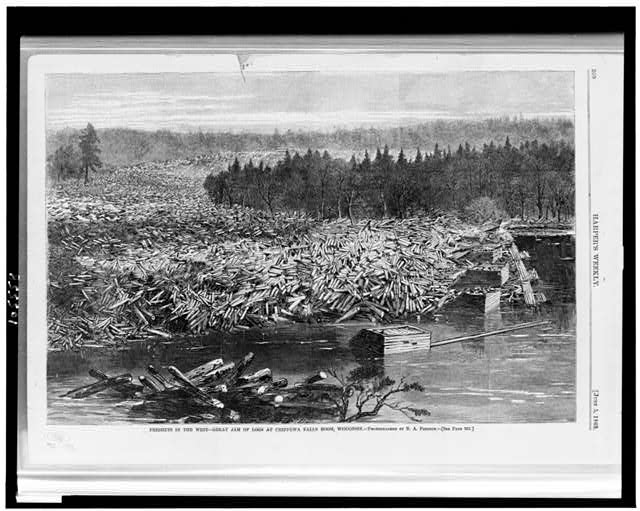
Great Jam of Logs at Chippewa Falls Boom, Wisconsin
Illus. in: Harper's Weekly, 1869 June 5, p. 360. Library of Congress Prints and Photographs Division, LC-USZ62-105558.