The Annotated Bobblehead Justice William Cushing
Click the red boxes to view the annotations.
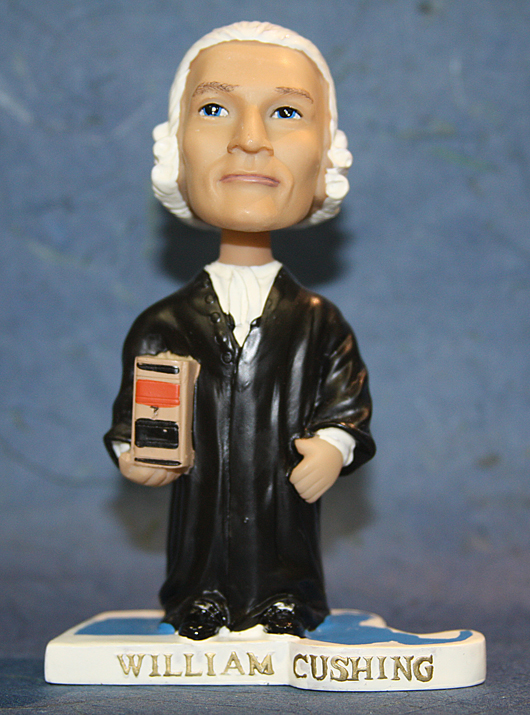
Click the red boxes to view the annotations.
Like several noted contemporaries, William Cushing was originally a loyalist. A risk of impeachment, however, forced him to renounce his loyalty in 1772. He was able to keep the royal courts open until 1775, at which point all royal commissions ended.
As chief justice of the highest court in Massachusetts, Cushing sentenced the men found guilty in Shay's Rebellion, the uprising among farmers in 1786 and 1787. Many were to be hanged, but almost all were eventually pardoned. Cushing's experience with the rebellion was the impetus behind his support for a strong federal government and national constitution. In fact, he had so little interest in state constitutions that he allegedly spent part of his time at the Massachusetts constitutional convention making a list of materials for a new suit.
Cushing wrote nineteen opinions during his twenty-one years on the Court.
When Chief Justice John Jay retired, Cushing was appointed to replace him. His health declined, however, and he remained an associate justice.


